


Frequent Bathroom Trips at Night? BPH Symptoms & The UroLift® Solution in Marion, IL
Updated: Aug 30
💡 At a Glance (Quick Summary):
Frequent nighttime urination (nocturia), a weak urine stream, and sudden urgency in men over 40 are classic signs of Benign Prostatic Hyperplasia (BPH), or an enlarged prostate. Unlike daily medications that can cause fatigue and sexual dysfunction or invasive TURP surgery requiring tissue removal, the UroLift® System lifts and holds blocking prostate tissue out of the way without cutting, heating, or destroying tissue. Delivered by board-certified urologist Dr. Lawrence Hatchett, MD in Marion, Illinois, this minimally invasive in-office procedure restores natural urinary flow while preserving sexual function.
Getting Up All Night to Use the Toilet? It May Be More Than "Just Aging"
A lot of men assume frequent bathroom trips are simply part of getting older.
Maybe you're waking up two or three times a night. Maybe you've noticed a weaker stream, more urgency, or that familiar feeling that your bladder never completely empties. It often starts gradually, which makes it easy to ignore.
The problem is that these symptoms can slowly begin affecting much more than your bathroom habits.
Interrupted sleep can leave you feeling tired throughout the day. Travel becomes less convenient. Long meetings, road trips, and even simple daily routines may start revolving around knowing where the nearest restroom is.
Many men live with these symptoms for years because they believe it's just something they have to accept. In reality, an enlarged prostate—also known as benign prostatic hyperplasia (BPH)—is one of the most common causes of urinary symptoms in men, and there are treatment options available.
One option that has gained significant attention in recent years is the UroLift® System, a minimally invasive procedure designed to help relieve symptoms caused by an enlarged prostate without major surgery.
Before exploring how UroLift works, it helps to understand what's actually happening inside the body when BPH develops.
If you find yourself waking up three or four times every night to use the bathroom, struggling with a hesitant or weak urine stream, or constantly planning outings around bathroom locations, you are not alone.
By age 60, over 50% of men experience urinary disruption caused by Benign Prostatic Hyperplasia (BPH)—a non-cancerous enlargement of the prostate gland. As the prostate grows, it pinches the urethra, forcing your bladder to work twice as hard to push urine out. Over time, your bladder becomes hypersensitive, leading to constant urgency and broken sleep.
Ignoring BPH does not stop prostate growth. Understanding your options—and knowing why modern minimally invasive solutions like UroLift® have superseded traditional surgery—is the first step toward getting your nights and quality of life back.
BPH Treatment Comparison: Medications vs. Surgery vs. UroLift®
When men seek help for BPH, they are usually offered daily prescriptions or invasive hospital surgery. Below is a direct comparison of how the UroLift® System at Hatchett Rejuvenation / Urology Institutes compares to traditional alternatives:
Treatment Feature | BPH Medications (Alpha-Blockers / 5-ARIs) | Traditional TURP / Laser Surgery | UroLift® System (Dr. Lawrence Hatchett) |
Primary Action | Relaxes muscle or slowly shrinks prostate volume | Cuts, burns, or vaporizes excess prostate tissue | Lifts and holds obstructive tissue out of the way with tiny implants |
Treatment Type | Daily, lifelong pill regimen | Surgical hospital procedure under general anesthesia | Minimally invasive in-office or outpatient procedure |
Recovery Time | Immediate (requires ongoing compliance) | 3 to 6 weeks; overnight hospital stay & catheter required | Rapid recovery; most patients return to normal activity in days |
Impact on Sexual Function | Potential loss of libido, ED, and ejaculatory dysfunction | High risk of permanent retrograde ejaculation (70%+) and ED | Preserves sexual function (no new-onset sustained ED or ejaculatory loss) |
Symptom Relief Speed | Weeks to months (often temporary or partial) | Immediate following surgical healing | Rapid symptom relief (as early as 2 weeks post-procedure) |
Understanding BPH
One of the most common causes of urinary symptoms in men is benign prostatic hyperplasia (BPH), also known as an enlarged prostate.
The prostate is a small gland located below the bladder that surrounds the urethra, the tube that carries urine out of the body. As men age, the prostate often grows larger. When it does, it can place pressure on the urethra and interfere with normal urine flow.
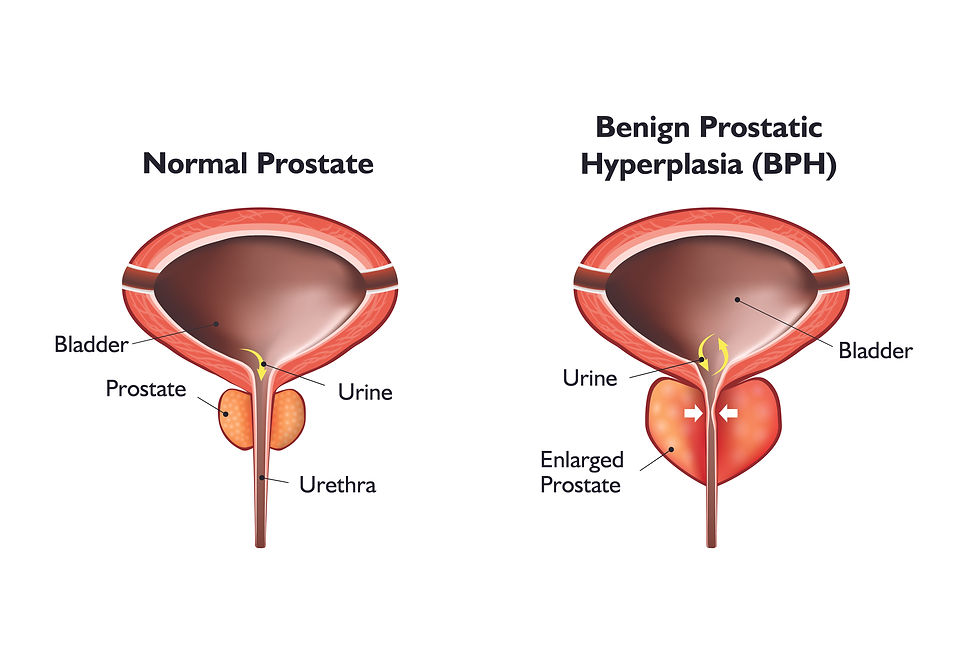
Common symptoms of BPH include:
Frequent urination
Urgent need to urinate
Weak or slow urine stream
Difficulty starting urination
Waking up multiple times during the night to use the bathroom
Feeling that the bladder is not completely empty
BPH is extremely common. In fact, about half of men ages 51 to 60 experience symptoms related to an enlarged prostate, and the prevalence increases with age.
What Is the UroLift® System?
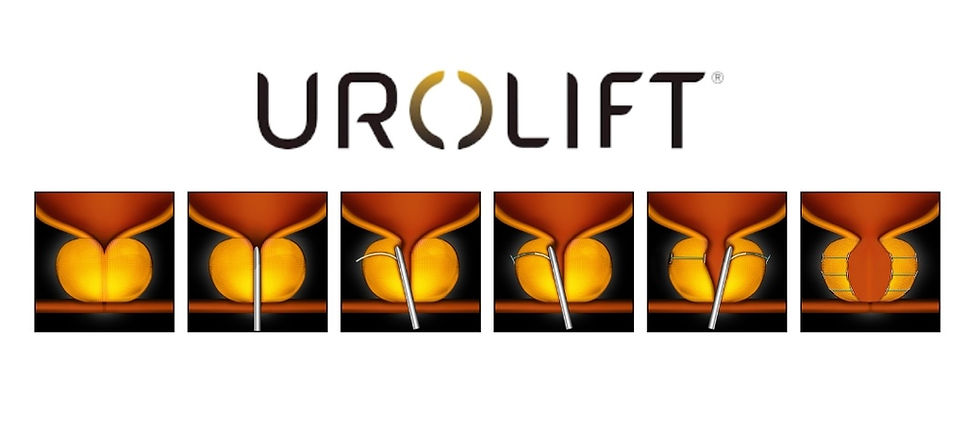
The UroLift® System is a minimally invasive treatment designed to relieve urinary symptoms caused by BPH. Unlike traditional surgical procedures that remove or destroy prostate tissue, UroLift works by using small implants to gently hold enlarged prostate tissue away from the urethra. This helps create a more open pathway for urine flow.
The procedure is designed to address the obstruction caused by the enlarged prostate while preserving normal prostate tissue.
Benefits of UroLift®
Many men are interested in UroLift because it offers a less invasive approach to managing BPH symptoms.
Potential benefits may include:
Improved urine flow
Reduced urinary symptoms
Minimally invasive treatment
Outpatient procedure for many patients
Faster return to normal activities compared to more invasive procedures
No cutting, heating, or removal of prostate tissue
A consultation with a qualified provider can help determine whether UroLift is appropriate based on individual anatomy, symptoms, and health history.

Patient Comfort and Confidence Matter
One reason many men postpone seeking treatment is uncertainty about what to expect.
At Hatchett Rejuvenation, patient education and comfort are important parts of the process. Men considering treatment are encouraged to ask questions, discuss concerns, and fully understand their options before making a decision.
The goal is not simply to address symptoms, but to help patients feel informed, supported, and confident throughout their care journey.
Taking the Next Step
If urinary symptoms are disrupting your sleep, affecting your daily routine, or limiting your quality of life, it may be time to explore your options.
Modern treatments like the UroLift® System offer new possibilities for men seeking relief from BPH symptoms without major surgery.
A consultation can help determine the underlying cause of symptoms and whether UroLift may be an appropriate treatment option for your needs.
Because while urinary changes may become more common with age, they don't have to become your new normal.
Frequently Asked Questions (FAQ)
Q: Is the UroLift® procedure covered by insurance and Medicare in Illinois?
A: Yes. UroLift® is covered by Medicare, Illinois Medicaid plans, and major commercial health insurance providers when medical necessity for BPH treatment is established.
Q: Does the UroLift® procedure cause erectile dysfunction or incontinence?
A: Clinical studies demonstrate that the UroLift® System does not cause new-onset, sustained erectile or ejaculatory dysfunction. Because tissue is neither cut nor heated, nerve pathways surrounding the prostate remain preserved.
Q: How long does recovery take after getting UroLift®?
A: Most patients experience minimal downtime and resume normal daily activities within a few days. Unlike TURP surgery, most UroLift® patients do not require a urinary catheter home after the procedure.
Q: Who is an ideal candidate for UroLift® in Southern Illinois?
A: Men aged 45 and older experiencing frequent urination, night waking, weak stream, or urgency due to an enlarged prostate—who wish to avoid lifelong medication side effects or invasive surgery—are prime candidates. A consultation with Dr. Lawrence Hatchett confirms exact anatomical suitability.
Take Control of Your Prostate Health & Sleep Through the Night
You don't have to accept broken sleep, weak flow, or restrictive daily medications as an inevitable part of aging. Experience the confidence of physician-led urologic care in Marion, Illinois.
Schedule Your BPH Consultation: Request an Appointment at Hatchett Rejuvenation
Call Urology Institutes & Hatchett Rejuvenation Direct: (618) 998-8500
Clinic Location: 3401 Heartland St, Marion, IL 62959
Why Choose Dr. Lawrence Hatchett in Marion, Illinois?
Evaluating BPH requires specialized urologic diagnostic care rather than standard prescription refills from a primary care visit.
As a Harvard-trained, board-certified urologic surgeon and national clinical speaker on minimally invasive BPH techniques, Dr. Lawrence Hatchett provides comprehensive diagnostic evaluations, including:
International Prostate Symptom Score (IPSS): Measuring exact symptom severity.
Uroflowmetry & Post-Void Residual (PVR) Testing: Assessing bladder emptying efficiency.
Targeted Ultrasound & PSA Screening: Ruling out infection, inflammation, or prostate malignancy.
By addressing BPH early with Dr. Hatchett, patients prevent long-term bladder wall thickening, urinary retention, recurrent urinary tract infections (UTIs), and kidney strain.


Comments